
Small Words for What Moves Through Us
Pulse. Stirring. Spark. Burst. Flood. Ebb. Ache. Breath. These are some of the words I’ve been collecting over the past few years to describe how creative energy feels as it moves through me (and maybe you?).
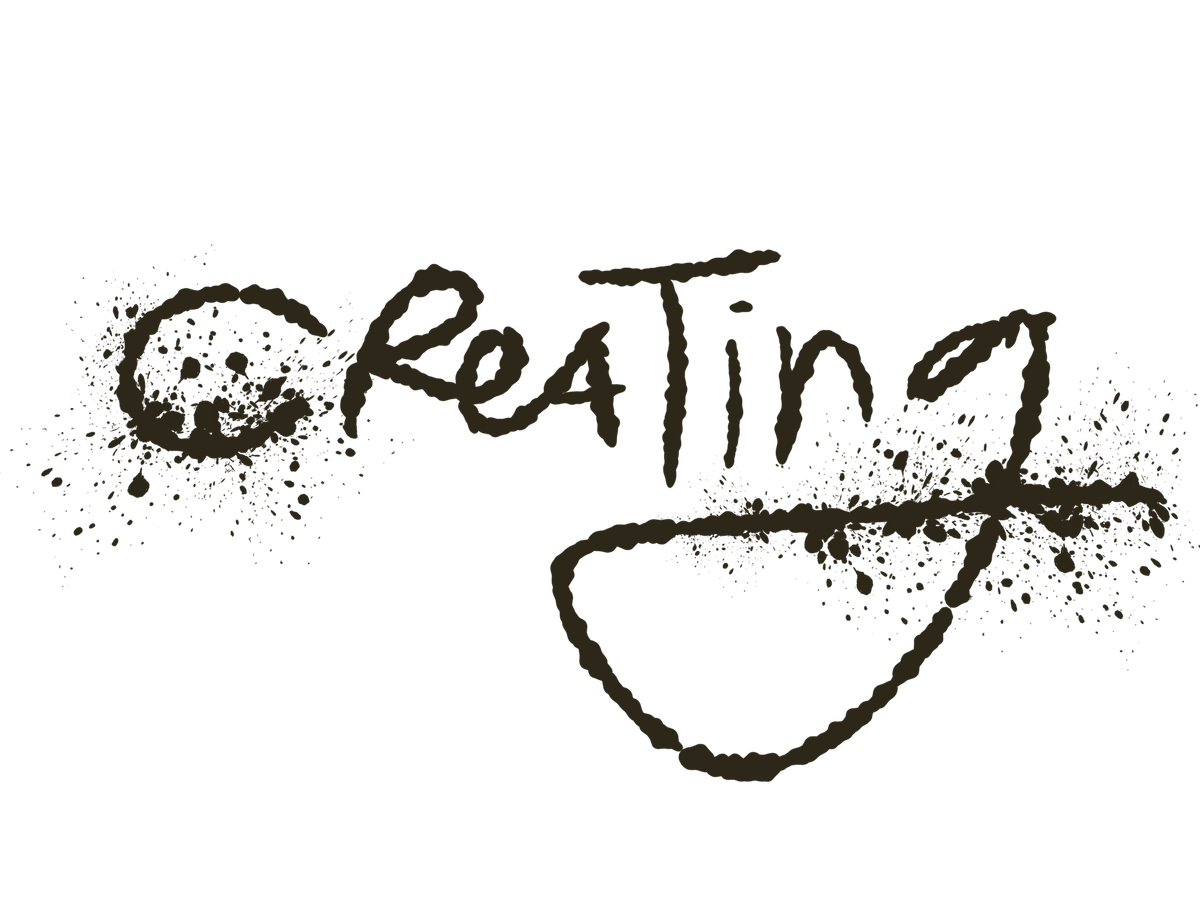
Pulse. Stirring. Spark. Burst. Flood. Ebb. Ache. Breath.
These are some of the words I’ve been collecting over the past few years to describe how creative energy feels as it moves through me (and maybe you?).
Which is not (necessarily) how we might describe the creative process, or its afterglow, in a blog post or a process video or especially not in a postmortem with a client.
This is how it feels, to me, while creativity is happening and moving and doing though me. AND how it feels when it is NOT.
What do we even call all those long, longing stretches of NOTHIN’ in-between our clear next steps, ideas, and creative actions?
I’ve come to believe that most creative burnout is, at least in part, a vocabulary problem.
Not entirely. There are real material conditions, like: money, time, support, resources, rest, the architecture of LIFE that allows the process of making things to happen.
And I’m not pretending those things don’t matter. Because they DO matter.
Underneath all the raw material of making, there’s another layer of language and understanding (or maybe INNER-standing) of the creative process, itself.
The language we inherited to talk about our creative work and creative process was mostly built by people who don’t ACTUALLY make new things.
Output. Throughput. Deliverables. Pipeline. Capacity. Bandwidth.
Useful words, in their place. Sure. If that place is a status meeting.
None of those words describe what creative energy actually feels like when it’s moving through me on a rainy Saturday morning, or what it feels like when it is NOT (especially when I REALLY need it to be).
It doesn’t capture the difference between the slow stretch that’s just a normal part of the creative process and desperate reach that’s something else (and maybe, we’re actually in need of a deep rest).
Without distinction, creators panic.
We read every ebb as the end of something...
We treat every low tide as some sort of cosmic judgement.
We find ways to push through phases that were never meant to be pushed through, and we end up creating something that has no body or heart or SOUL in it.
It’s work that’s all surface, and it doesn’t hold more or carry anything deeper.
And THAT often makes us feel even MORE tired or drained or depleted than we should be. And then we just call it burnout.
We’re not wrong...
But we are also not seeing the deeper thing or meaning, which is that we haven’t always had words for what’s actually happening to us in this PROCESS, in the first place.
So I started noticing and collecting my own words. New words. And shaping new language and new meaning to describe these things...
Words for creation, creative action, when the DOING begins...
With a stirring, and it is barely a thing at all, but SOMEthing is moving. The idea hasn’t fully arrived yet. We can’t point at it (yet). And we definitely can’t describe it to anyone else without sounding precious or pretentious, vague or weird (or just outright, deranged). But our body knows. Our gut and our heart knows.
Stirring is the part people forget because there’s nothing to show for it (yet), and yet without it, nothing else would happen. Stirring is where the entire arc and art begins.
Then, the pulse. This is the REAL beat we’re working by. The rhythm that organizes the next stretch of time, even when we can’t yet see what’s taking shape.
Then, the spark. This is the first flicker that’s actually visible. It’s a the first sentence or tagline or moment that arrives whole and holy. A shape that suggests its-total-self. A line, a color, a phrase, a chord that’s ready to catch hold.
Then burst. The pulse ARRIVES. There’s nothing subtle about it now. Whatever was stirring has become here and now, and it has its own momentum, and we are no longer choosing to make the thing. The thing is making itself through us, it’s asking and pleading with us to please, just keep up.
Then, a flood. The making comes faster than we can catch it, sometimes. The work outpaces our ability to hold it. This is the part we dream about. Creativity flows and crests. This is also when, if we don't honor what follows, if we don’t catch that wave, it might take us out.
Words for recreation, rest, and when we withdraw, again...
To the ebb: a receding of energy and forward movement. This is not a creative problem to solve, but it IS a necessary pausing.
And the ache: is a longing in our lowest tides. The part where we wonder if it’s over. Forever.
Then, there’s just a ... dormancy: that does not mean death. We are simply waiting, and this is a phase that looks like nothing from the outside (but is probably the most important phase from the inside).
And a hum: the low frequency of something returning. You can't see it yet, but you can feel it underneath. The next stirring is on its way.
And finally, a new breath: the first real inhale after baring our soul and art and work. The body reignites, again.
And then stirring again, because it's never a line. It's always a spiral, a circle, a recreation.
These words (all together) actually describe a larger process.
This is one full breath of a creative cycle, and it needs both the EXHALE and the INHALE.
Half these words are for the rise and half the words are for the recovery.
The vocabulary we like to use in our professional creative work covers maybe four of these phases and all of them live on the RISE side.
We have the creative spark and we have creative flow, more or less.
We have nothing for creative ache.
We have nothing for creative dormancy.
We certainly have nothing for the perpetual creative hum.
Which means we have no language for more than half of what’s actually happening to us when we make things.
To me, this seems like a substantial creative problem.
When we don’t have a word for dormant, we might read it as failure.
When we don’t have a word for ache, we might see it as proof that our creative work is over, or that we weren’t the right person for the job, or that maybe we’ve lost whatever “spark” we had before.
When we don't have a word for hum, maybe we can’t tell the difference between a fallow period and an actual ending. And we’ll either give up too soon, or push too hard against a phase that was just needing us to take a breath.
Naming these subtle creative phases doesn’t make them any shorter.
And it DEFINITELY doesn’t make them easier to navigate.
But I DO believe it makes them a bit more visible or legible and certainly more accessible. And I think legibility is a sort of permission. So we can (FINALLY!) be like, “Oh yeah! This is just part of my creative dormancy. I know what this is. I don't have to fix it (or myself). I just have to wait for the hum to arrive, again...
(like the hummingbirds finding their way home after winter).
Here’s small confession, since we’re all here in this together...
This language didn't arrive in a single working session.
I didn’t sit down to develop this framework and write this post all in one go.
These words assembled themselves, slowly and surely, and then found their way to the page on a slow, gray afternoon when I had finally (finally) released my grip a bit after a stretch of intense work, and was just letting the day be a day. And took a moment to breathe and exist in the dullness of dormancy.
The zine I made (below!) from these words could not have come from a “productive” day. I needed an inhale.
So, it came from a day when I gave myself permission to NOT be productive. And to PLAY and to sit with the creative ache, a bit.
Which is, I think, part of the lesson these words are trying to teach me and you and us...
The process of naming this cycle arrived during the parts of the cycle that are hardest to hear and hone and honor.
The vocabulary of the low-tide-phases (I think?) had to be seen/heard/recognized during a low tide, and by being willing to sit still long enough to notice.
I could NOT have seen creative dormancy from inside a creative flood.
Being more present in our low-tide seasons and creative inhales, allows us the full benefits of that beat of rest.
I think part of what I’m offering here, alongside the words themselves, is the suggestion that—maybe, the words we most need, aren’t going to come from our most productive hours. They’re going to come from the hours we’ve been taught not to count at all.
I made a small zine of a few of these words. Eleven of them (so far), plus a brief opening and a closing line, folded into a li’l sixteen-panel pocket booklet from a single sheet of paper.
You can download it below, print it, fold it, and carry it around if you’d like!
It is free, in the sense that the words are free; it is also, in another sense, what I have been quietly working on for a very long time...
But really, this zine is just a prompt.
These eleven words are mine and my way of seeing things.
Yours might overlap with mine in places and diverge in others.
Your rhythm has its own vocabulary, and if you listen for it in those quiet moments after a flood, in the ache at low tide, in the hum before the next stirring... You MIGHT just start to hear it and feel something new stirring awake inside you.
As always, take what’s useful and leave the rest.
Make your own language for your own body.
That’s the whole practice.
THAT, honestly, might be the whole thing...
The pulse will come back. It always does. And when it does, maybe you’ll recognize it (and have a word for it), because maybe, you’ll have been paying attention to the shape of how it move through you...
A pocket zine, folded from a single page. Download, print, fold, cut, and carry.