My Business Was Always BENT on Purpose.
For most of ten years I sold logos, photos, and websites. The thing I was actually best at, I gave away free every single time. A ten-year reckoning, and a grand reopening.
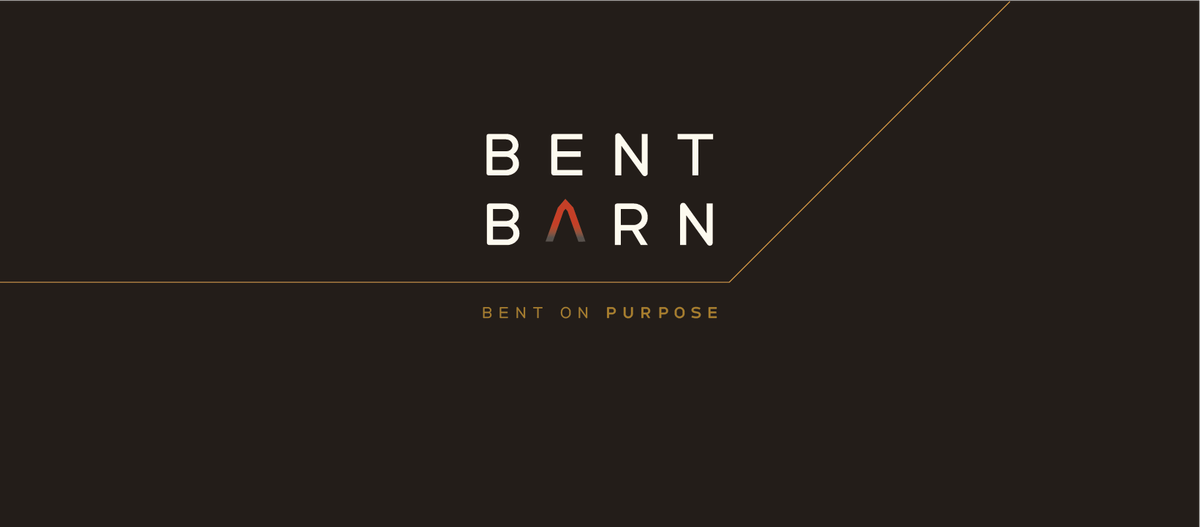
Ten years into Bent Barn Studio, the purpose behind the business—and the redesigned logo—finally turned out to actually mean something.
This isn’t an essay about a new logo…
Although, heck yes, there’s a new logo!
There’s also a renovated website, a clarified body of work, and a business finally willing to say clearly what it does, who it serves, and what that work is worth.
So, after a summer of creative renovation and ten years of becoming, consider this the grand reopening of Bent Barn Studio.
The doors are open. Come on in!
This renovation started with an itch
Earlier this summer, I opened up some of the old Bent Barn logo files.
They’d always been placeholders, really. Early iterations I assumed I’d eventually replace with the refined, official, REAL ONE I’d finally design someday—when I had enough time, clarity, confidence, or whatever else I thought I was waiting for.
Those earlier versions reflected the studio’s beginnings. They felt down-home, rustic, and handcrafted.
And there wasn’t anything exactly wrong with them. But they also never really reflected the level of creative craft, strategic thinking, or experience I was bringing to my clients.
My first response was basically: Meh.
Which, honestly, may also have been the response of more than a few potential clients.
Those first iterations felt bland. Old. And NOT at all like the business I wanted to keep building for another ten years—and beyond.
I sat with that creative discomfort for a while, because “bland and old” is the kind of judgment that might mean two completely different things, even though they feel nearly identical from the inside.
The first possibility is that we’ve lost our nerve. Maybe we’ve started measuring our work against strangers on the internet, found it lacking, and decided to redecorate the packaging instead of doing the harder work of aligning what’s inside.
I know that feeling well. I know plenty of other creators and creatives who know it, too.
The second possibility is a little simpler: maybe our work has grown, and its clothes just don’t fit anymore.
And here’s the tricky part: both possibilities produce the exact same urge—open the design files and start over.
Which means we can’t tell them apart by staring at the logo. The logo isn’t the variable.
There’s really only one question that separates the two:
Has the work changed?
A logo is a visual description of the work. If that description stops fitting, either we’ve become insecure about something that’s still true, or the thing being described has changed shape and nobody bothered to update the label.
We can’t fix the first problem with design. We can only fix the second one with design.
So I went back and reviewed ten years of my own business to figure out which problem I had.
And—WHEW!—lucky for me, it was the second one.
I also found a few things I hadn’t been especially eager to look at directly.
Those turned out to be the actual story.
What I left—and what I left for
Ten years ago, I left my corporate creative life and started a studio in the barn behind my parents’ home in Allen, Texas.
My dad built that barn with his own hands when he was in his seventies. That’s ultimately where the business name came from.
It was a literal structure before it was ever a metaphor.
But I didn’t leave the safety net of corporate life because I desperately wanted to go make more logos from nine to five.
I left because I kept meeting a particular kind of person and couldn’t stop thinking about them:
People who help people.
Counselors. Healers. Educators. Small nonprofits. Community-minded businesses. The local shop that’s technically a store with a cash register, but is really a gathering place where the Weird Ones feel safe.
People doing meaningful work that was badly described, mislabeled, or supported by platforms that didn’t help them reach the people who needed them.
Invisible and misnamed, for sure. But mostly just misunderstood.
Sometimes, they were simply too busy doing the work to step back and explain what it actually was—much less describe it in a way that could resonate more deeply, reach more people, or create a bigger impact.
That was the purpose of Bent Barn from day one.
It’s never changed.
What I did NOT have was a business model.
I had a purpose and a skill set, and I assumed the skill set was how I would deliver the purpose.
That assumption cost me about eight years.
Here’s what I thought I was selling…
For most of Bent Barn’s life, the website listed:
Logos. Photos. Websites.
Nouns.
Deliverable things you could point at, put on a menu, and request a quote for.
And I want to be fair—and gentle—with that first version of the business, because it fed me and my family. It sustained us through some very difficult seasons: moving to East Texas, navigating COVID, and recovering from the barn fire.
It also created things people genuinely liked, loved, valued, and USED to help their businesses and ideas grow.
But there’s a trap inside selling nouns that I didn’t see for the better part of a decade:
When you sell a deliverable, you compete with everyone else selling that deliverable—at the deliverable’s market price.
A logo has a market rate. So does a photograph. And so does a five-page website.
A potential client can compare my creative services with another local agency, someone on Fiverr, their AI design collaborator, or their nephew who’s “pretty good with Canva.”
And NONE of us are necessarily wrong about what a logo costs, because we all appear to be pricing the same deliverable.
My thirty years of experience showed up as quality. And the care, thought, and creative craft I brought to the work were VERY real, too.
But “quality” is a soft argument inside a conversation about a hard deliverable.
Meanwhile, the thing I was really, actually, TRULY best at—the part that made the deliverable work actually work for my clients—was usually happening during the first few conversations.
It happened in the time I spent with a client in present curiosity, strategic inquiry, and intuitive ideation, before I ever opened Illustrator, Photoshop, InDesign, WordPress, Squarespace, or anything else.
It happened when we connected, I got curious, and together we figured out:
- What they were really here to do.
- What people weren’t understanding.
- What had changed.
- What needed to stay true.
- What they were afraid of losing as they grew.
- And what to call the whole thing.
I gave ALL of that—the curiosity, pattern recognition, strategic thinking, and connective work that made the final deliverable effective—away for free.
Every. Time.
For years and years.
And honestly, for most of the thirty-year career that came before Bent Barn, too.
I thought of those conversations as the kickoff before I started the job instead of recognizing them as the central part of the job itself.
I was helping people who help people, but only at the limited depth my limited invoice allowed.
And honestly, that depth wasn’t very deep at all—because I wanted to remain super accessible to anyone and everyone who might need my creative help.
What the fire did to the business
In 2017, Mom and I moved to Longview.
The house she chose had an old red barn standing in the backyard.
FUN FACT: that’s how she knew it was the one.
That backyard barn became my first real art barn and the next home of Bent Barn Studio.
And then, in July of 2022, it burned.
I’ve written elsewhere about what that loss meant personally, and I’m not going to retell the entire story here.
But there was also a business consequence worth sharing. It’s less poetic, but probably more useful:
Losing the studio made me more transactional, not less.
Under survival pressure, I did NOT automatically become more visionary, intentional, or strategic. I was tempted to become faster, cheaper, and more willing to say yes.
The work contracted to whatever could fit inside the window-corner of my bedroom.
I said yes to more jobs—smaller jobs with quicker turnarounds. I based prices on whatever I thought someone might agree to that week. Whatever might buy groceries, put gas in the truck, or pay a bill.
My menu of services got shorter and more urgent, and I was burning out faster than the barn did.
For about a year and a half, the business was basically a creative vending machine with a meh attitude.
I took on every logo, photograph, website, postcard, video edit, and image cleanup I could piece together—which wasn’t actually all that much, because I was also trying to survive and clean up the mess I’d made.
I couldn’t physically or creatively manage much client work during that season.
That’s simply the honest shape 2022 and 2023 had to take.
Any version of this story where the fire immediately sparked a beautiful, meaningful business transformation would be a story somebody else cleaned up afterward.
Because that’s not what happened.
At least, not right away.
The accidental education
You can’t learn brand architecture in a single webinar.
I think you REALLY learn it by watching organization after organization misname itself—and ask its questions in the wrong order.
The sheer volume of work I’ve done throughout my career has taught me something no strategy retreat ever could’ve touched.
Job after job, I started noticing that the real creative problem was almost never the requested deliverable problem I’d been hired to solve.
The same deeper issues kept repeating.
An organization had never fully agreed on what it meant, so every person or department was building a slightly different structure.
A brand had inherited language that no longer fit, but everyone was too polite—or too busy—to retire and reinvent it.
A small business had grown beyond the story that got it started without ever outlining the next chapter.
None of that can be fixed with a logo alone.
All of it is fatal to one.
So I started solving those issues upstream.
I still labeled the invoice “brand identity” because that was the language I had available for the line item. But clients began paying me more often for the conversations, questions, language, creative decisions, and organizational systems that didn’t necessarily produce a design file at all.
THAT was the first real signal that something needed to change—and already HAD changed—in my business.
And I STILL ignored it for at least a year because it didn’t match what I thought I did for a living.
Then came the client engagement that finally made the whole thing make sense: developing a brand architecture for an international nonprofit working across twenty-three countries.
They needed to navigate three tiers of brand, governance documents, and a shared lexicon designed so that a practitioner in one country and a partner in another could clearly understand that they were building the same thing.
The deliverable was a system.
More specifically, the deliverable was brand coherence.
The system was simply where that coherence could live—and keep growing.
That was the moment I realized I’d spent years standing inside the wrong category of work.
It wasn’t a worse or unworthy category. It was just a different kind of business sitting right next to the one I kept trying to build.
One I kept wandering into—and then apologizing for.
The detour taught me the thing.
The detour WAS the thing.
What I was actually worth
Which brings me to the least comfortable part of this story.
I have a long, well-documented habit of discounting my work before anyone asks me to.
I’ve been known to quote a number and then cut it in the same email. To pre-apologize with the price. To explain ALL the ways I could make the work smaller and cheaper before the other person had even responded.
I used to think that was entirely a problem with my confidence.
And some of it is—err, was.
For SURE.
But a lot of it was also a category problem, and I think that’s actually a much more useful diagnosis.
When you sell deliverables, there’s already a price anchor in the room. Everyone believes they know roughly what a logo, website, photograph, or other noun-deliverable should cost.
When my number came in above that imaginary anchor, I could feel the gap and would close it myself—preemptively, out of something I told myself was…
Generosity?
Structure and strategy don’t have that same anchor.
Nobody walks into a conversation about maintaining a shared lexicon across twenty-three countries with a Fiverr comparison in their pocket.
The value isn’t only in what gets produced.
It’s also in what the structure protects—and what it prevents:
- A decade of drift.
- A hundred small misalignments.
- Teams working hard in opposite directions.
- A founder’s meaning slowly diluted on the way up.
For years, I was doing brand architecture at a deep discount and calling it humility.
But it wasn’t humility.
It was the same description problem the logo had—aimed at my own invoice.
Who Bent Barn is for now
Here’s the change that took me the longest to see because it happened so gradually it seemed like nothing:
I never stopped building for people who help people.
But over time, the work they were asking me to help hold got bigger.
Ten years ago, I was focused on helping a single practitioner with a good heart and a bad website.
Now, I’m focused on helping the organization that practitioner eventually founded—with staff, partners, programs, chapters, funders, and a leader lying awake at night, worried that the meaning will get diluted as the work expands.
Same person.
Just later in the story of their work and their mission to help people—often with bigger stakes.
Bent Barn Studio is now:
Brand strategy, brand architecture, and creative direction for purpose-led organizations.
I’m not just delivering logos.
I’m building the structure underneath the logo, establishing the language that helps everyone build toward the same thing, and providing the creative direction that allows an organization to grow without becoming unrecognizable to itself.
This is the first time I’ve been capable of serving the original purpose at the scale the work truly requires.
And the smaller, earlier version of my work hasn’t been thrown away during the renovation.
The individual maker who needs a place safe enough to begin—and support when they’re brave enough to keep going—has a house of their own just down the road.
That’s what my new work at Wild Creating is for.
Nothing was abandoned.
It was sorted.
And that’s what finally allowed Bent Barn to specialize.
My creative method
My creative method got a new name this year, too!
I didn’t invent a clever framework and then start applying it to clients. I’d already been making the same three moves for years and years.
This year, I finally watched myself closely enough to capture the process:
See—the creative vision.
What’s already true here that nobody has said out loud?
Name—the creative lexicon.
What words will help everyone understand—and build—the same thing?
Build—the creative structure.
What system will hold the meaning as the organization keeps growing?
It’s a creative method a client can actually use.
See comes first for a reason.
Most of what an organization needs is already present. It just hasn’t been fully SEEN.
It’s hiding in a word somebody uses during every meeting without noticing. Or a story the founder has repeated for ten years without really hearing. Or a tension everyone can feel but nobody has put into words.
Which is, of course, exactly what I’d failed to do for my own business.
For ten years.
Bless it.
And THEN, the new logo…
The redesign took a few weeks.
It was the last thing to change and, I’ve come to believe, probably the least important part of this story.
But I do want to share one moment from the process.
I was sketching rough placeholder options—you know, the quick, disposable directions you create just so you’ll have something to react against—and I drew a barn roofline.
A gambrel.
Who knew that was a thing?
Somewhere in the middle of that line, I finally SAW what my hand was drawing.
A gambrel roof is, structurally and literally, a bent gable.
The name, the ethos, and the mark were the same object. They’d been sitting inside the name for ten years, in plain view, wearing no disguise at all.
The cobbler’s kid finally got some shoes.
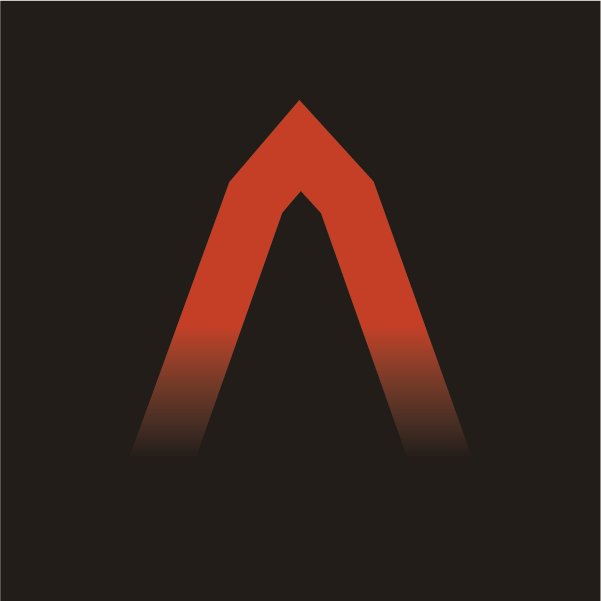
The A in BARN is now a custom glyph: a pared-down roofline made from two rising strokes, with no crossbar to close it in.
One side recedes into shadow and soot. The other catches fire.
It’s still unmistakably an A, but it’s also a small barn, a peaked roof, an arrow upward, and—depending on how long you look at it—maybe even the tip of a fiery flame.
The bend isn’t in a softened corner or a visibly warped piece of timber.
It’s in the meeting.
Two separate lines change direction toward one another and become something new at the peak.
Bent doesn’t mean broken or misshapen.
It means redirected. Reoriented. Given a new angle without losing the integrity of the line.
I didn’t fully understand that while I was drawing it. I only knew the old logo wasn’t saying enough—and this one felt more alive, current, and true.
It took me a little while to admit that it was also a sentence about the business.
A barn burned.
A practice changed direction—out of corporate life in 2016, through the fire in 2022, and into this.
Three bends. One line.
Never once broken. Still going up.
And there, at the peak of the A, is a small point of warm light.
I called the layer “ember” one night. It was a quick decision, made without much thought because it was late and I was trying to hurry.
I didn’t think about it again for several days.
Then I realized:
There’s a fire living inside that mark.
I don’t think I consciously designed that.
I think I finally saw it.
One more thing
The barn my father built is still standing in Allen. I drove past it a year or two ago while I was in town, but I didn’t stop. I just slowed down long enough to see it standing there in somebody else’s backyard—belonging now to someone who probably has no idea what was born inside it.
My dad’s barn gave the business its first home and its name. The little red barn in Longview gave it another place to grow. And when that one burned, the work kept going.
I think I understand something now that I couldn’t have understood ten years ago: Bent Barn was never only about the building, the name, the logo, or even the level of creative work it held.
It was about creative permission—a place to begin before I knew exactly what I was building.
Which is a little funny, and a lot humbling, because I spent ten years waiting to earn the REAL logo. The refined, official one I’d finally design someday, when I had enough time, clarity, confidence, or whatever else I thought I was waiting for.
I was waiting for permission from a business whose first gift to me was permission.
And that first logo wasn’t really a placeholder after all. It was simply honest about where I was standing at the time.
The barn was a structure my father made with his own hands. Bent Barn became a name spacious enough to keep holding the work as it changed shape.
And now, ten years after Bent Barn Studio first opened its doors, the business is open again.
This isn’t about returning Bent Barn to what it was, and it isn’t finished becoming, either. But it’s clearer, more honest, and more useful to the people and organizations it exists to serve.
And it’s more itself than it’s ever been.
There’s a renewed identity, a rebuilt website, and a more focused, strategic, and creative practice. Underneath all of it is the same purpose that started the whole thing.
Welcome to the renovated Bent Barn.
Come on in. Take a look around. Read the new story and see what’s been rebuilt—and what was here all along.
Ten years old. Still standing. Still becoming. Still a little weird.
Bent on purpose.